Monday, 17 November 2014

We need to talk about Kevin...

...Said Kevin's wife, Sue. And talk they did. Luckily, he is a much loved man.


Kev

This was Kevin's 50th birthday and a... what's the word... a precious evening it was; a joy to listen to the speeches from his eight friends, even if they did leave skeptical me feeling emotional and not a little inadequate. Maybe that's why I enjoyed Jeremy's contribution the most as he started with : I am a deeply flawed man...' Yup. Me too.

Sue
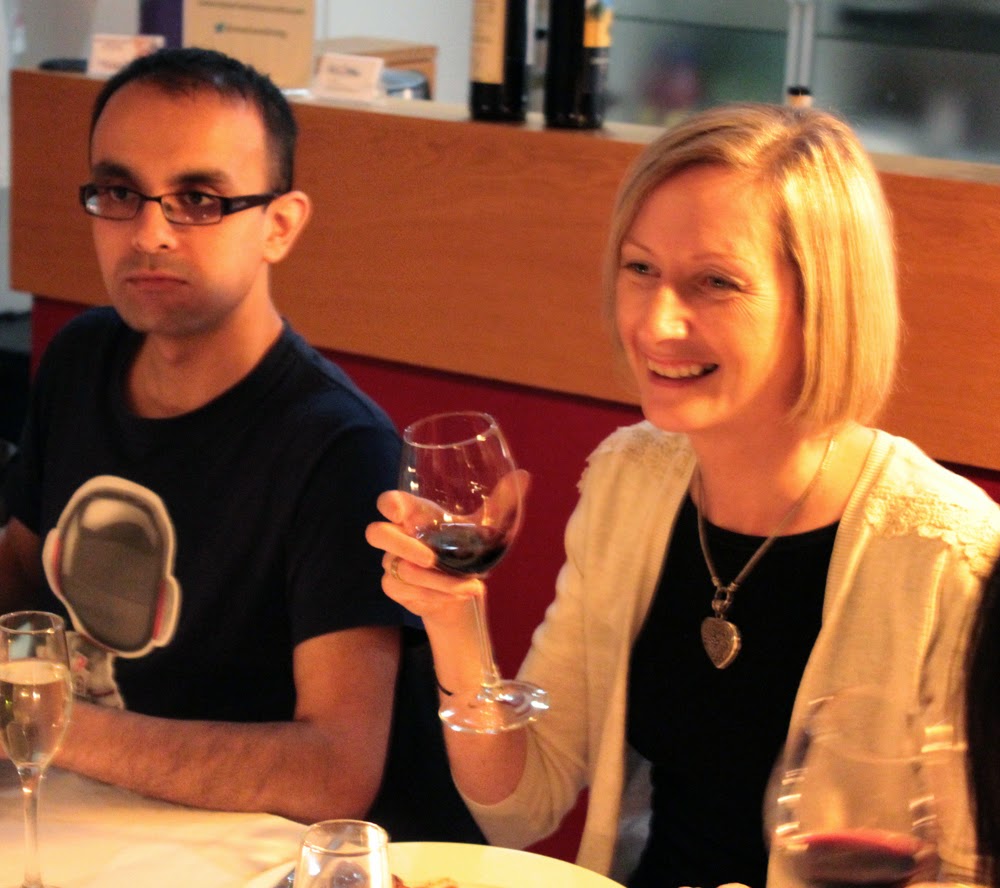
This was New River Restaurant at its best. Food in an informal setting; an intimate space that groups make their own. Hearty, delicious food (they told me), much laughter and dancing to music of choice. We (OK, Etien) even put a sparkler in Kevin's sticky toffee pud.

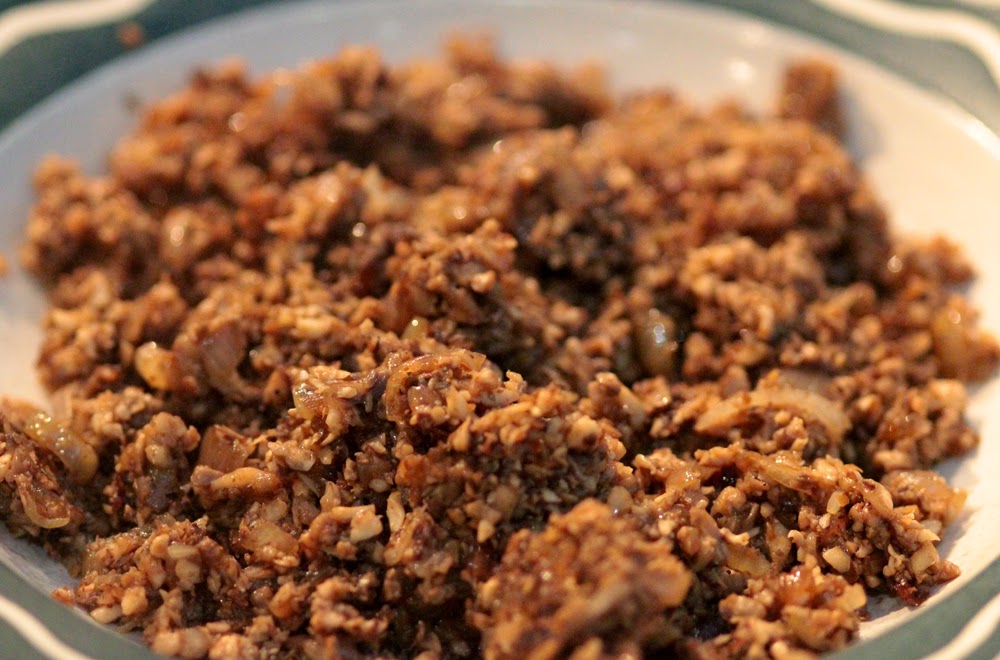
It was a meal of restaurant regular favourites. A starter of stuffed courgette and a split mains with four having roast poussin and six salmon en papillote. This is a great mix because the sides accompany both equally well. I served fennel crash pots, orange caramelised chicory, a lemon verbena hollandaise and onion fondue, which is rapidly becoming our most asked after recipe.

So it seems that I've never detailed crash pots or my quick hollandaise sauce. This will soon be corrected. I'll post links when I do.


Friday, 14 November 2014

Elsa's midweek birthday and beef Wellington... and a confession

Elsa (left) with girlfriends and daughter.
You wouldn't have thought they'd have the energy to dance after a meal of Beef Wellington and sticky toffee pudding.
Elsa was the third person to ask that week. "Do you do beef Wellington?" Thing is, I didn't but I was beginning to think I should. Is that the confession. No? That would be dull.

When I started the restaurant it was as a fund raising exercise. To that end, and because I thought I was filling a market gap, I mainly offered slow cooked foods: cheap and often overlooked cuts - shins, shanks, cheeks and bellies - that deliver flavour through time and endeavour. I deliberately avoided the choice fillets and breasts. Partly this was about my own costs as I obviously can't offer a dish I haven't cooked and tried myself, but partly it was a principle; it's easy to take the MasterChef route and pan fry the flashy, expensive stuff but I wanted to do 'everyday ingredients differently'.

But Elsa was celebrating her birthday and (as she insisted) beef Wellington is a good dish to have in your repertoire - It's regarded, rightly or wrongly, as the king of English meat dishes - and I have been looking for a new beef offering. It's also nearly Christmas. Maybe more people would want to splash out on this poshest of pasties.

So I agreed. 

And splash out you have to. Be ready to empty the pool. The dish uses a centre cut fillet of beef, the most expensive part of the cow. This is where those delicious nuggets of fillet steak, medallions and mignons come from. And if you want your animal to be of good provenance and high welfare... be ready to part with at least £40 a kilo.

This is Mk 1 Wellington that I served to my family for Sunday dinner. There's too much pancake here and too thick a mushroom layer; I reduced both for Elsa's party.

That name - Wellington... there's no evidence that it was made for or even eaten by Arthur himself. In fact the dish may not have been invented in time for his Dukeship, dukedom, whatever. The earliest attested date cited by the Oxford Dictionary is 1939, in a New York restaurant guide. As with so many dishes, the history is as much a creation as the food itself.

Historic it may not be, delicious and rich it certainly is. Almost a meal in itself. The fillet is seared, coated in a paste of chopped mushrooms (duxelles), wrapped with something to keep in the meat juices - crepes, spinach or thin ham and finally encrusted in pastry. 

As this was my first time I decided to keep it classic. I used a recipe from Michel Roux Jnr. I'm a big fan of the Roux family and trust their recipes. The trouble with the classics is everyone wants to present their 'twist'. Perhaps it is wonderful (Gordon) with black pudding purée but I need a benchmark first. I was also going to serve it traditionally, with a port gravy, green beans and creamy potatoes dauphinoise.

This isn't a difficult dish. It has a bit of a rep I know but I expect much of that is the sheer cost. No one wants to waste a £55 fillet. It does have a fairly high faff factor. Let's take them in order.

This Wellington was enough to feed eight people.


Beef.

The main event. Don't skimp, there's no point. This is a celebration dish. It should be luxurious and expensive. If you want cheap meat in pastry, Ginsters or Greggs will oblige - I know, I eat enough of the bloody things. I used a 1.2 kilo (after trimming) Aberdeen Angus beef, as ever, from Julian at Wades Hill Butchers.


Beef Wellington - NUDE!

One of the benefits of the fillet is that there's very little waste. You buy a kilo, you eat a kilo. But check it over. Remove fat or membranes and thumb into the meat to find and remove any sinew or gristle. Remember the beef is barely cooked if you serve it medium rare (AS YOU SHOULD) so there's no heat for this stuff to hide behind.

Searing the beef is really important. Note I said searing not sealing. You cannot seal meat with heat. Colour = flavour. Coat the beef in salt and black pepper. Don't just sprinkle a bit on the top. Press the seasoning in on every face. Sear the beef in a smoking hot pan with a neutral oil. Rice bran oil is good here because it has a very high smoking point. You're looking for deep, crusty brown tones. I went back over the joint with a blow-torch, just to be sure.

I brushed the fillet with English mustard, a Gordon Ramsey favourite, then wrapped it tightly in clingfilm and refrigerated. This helps to form a more cylindrical shape.


Crepes

Next are the crepes, we can call them pancakes if you like, designed to be a barrier between juicy meat and crispy pastry. I decided to make my own crepes. Duh! Despite Michel advocating shop-bought. Crepes aren't hard and I added a good sprinkle of fresh thyme into mine.


Crepes. Shame you can't see the fresh thyme.
There's a deal of discussion on-line about the best wrap for the beef with many going for pancetta or even bacon. I think this is a mistake. If I pay for beef fillet, I want to taste beef fillet. These other meats are highly flavoured and will interfere. No porkiness here thanks. Crepes are traditional but I think even with ultra thin ones, they add too much sog. I did read about using filo pastry and I think I'll try that next time. It's crisp and impermeable.

My family Wellington was made with my usual two egg batter mix but I only used one egg for the restaurant meal; thinner batter meant lighter pancakes. These were well seasoned and I added a good handful of fresh thyme. Keep the pancakes layered with greaseproof paper if not using immediately.


Still can't see the thyme.
I overlaid three trimmed pancakes onto clingfilm and spread these with a thin layer of the mushroom duxelles...


Duxelles

A word I've never heard used before or since, duxelles is chopped or minced mushrooms. They have a word for every culinary eventuality those French. Here I added two chopped shallots. It's important to fry the mushroom mix without oil until it is fairly dry as that moisture (mushrooms are 90% water) will turn to steam and blow out of your delicate pastry case.

I used a punnet of chestnut mushrooms and two long shallots that had been sweated off in butter. I added a smidgen of double cream, just enough to make a paste, and a teaspoon of the truffle paste I use for my amuse bouche velouté.

Some specify a smooth paste but I agree with Michel Roux (like we chat all the time) in, advocating a textured mix. Some also add black pudding, chicken livers, various patés or even fois gras (I wish!) but I'm keeping it simple.


The cooled beef is wrapped in the duxelles coated pancakes. Again use clingfilm to roll the pancakes onto the meat and then secure them. Twist the ends of the clingfilm to make a tight cylinder and refrigerate again. The package must be cool before you encase with pastry.


Puff Pastry

And here comes the confession. I didn't make my own. I've had a go at puff before and it is a tedious thing, rolling and turning and folding. All in, it takes about two an a half hours. You do get a better rise from home-made but I bought some good, all butter blocks. I read that even Michelin starred restaurants buy in PP which helps me deal with the shame. But if you want to make your own, this recipe is excellent.

Sadly, the egg wash makes it look rather slimy. 

You'll need a sheet about 3mm thick (pound coin) from a 400g block. I used more for a leaf motif decoration.

Using more cling film, roll out the pastry until it's slightly wider than the meat and pancake parcel. egg wash the pastry liberally, this helps to glue the overhang in place, and place the meat at one end. Using the clingfilm, roll the meat up in the pastry (like a huge saus' roll) and cut off with only a slight overlap. Egg wash the seam and press together, thinning the pastry so you don't get a thick ridge. Ensure the meat parcel is tightly wrapped, big air pockets could blow out the pastry.

Now fold over the ends like a parcel, again with the egg wash. You can decorate the pastry with traditional scoring or with pastry cut outs. The scoring also allows the case to expand rather than split, as you can see below. I made pastry leaves. No idea why. None of this has anything to do with trees. Cover the outside pastry with an egg wash for a golden finish.

A pair of Wellingtons. The big beef and the little veg.

The Bake

The trickiest part of the Wellington is the bake. Without any means of testing the meat you have to trust the recipe. And you can't trust recipes because there are too many variables. Once you cut into it, you can't return it to the oven. OK, you can, but I can't in the restaurant. The ends, of course, will be more cooked than the middle. This gives you some serving flexibility; medium rare middle with medium ends. 

In other recipes that call for a 700-800g joint, the timings given were 30 minutes. Michel Roux's instruction for a 1kg piece was for 25 minutes at 180°C and a resting of 10 minutes. Mine being slightly larger at 1.2kg, I opted for 30 minutes... and reader, it was room temperature in the middle. The beef in a Wellington was always meant to be served rare but I swear you could still have milked that middle bit. I was lucky not to have served that to paying guests. 

For Elsa and Simon's party I increased the time to 38 minutes with an even longer resting time. This was much better - tender and pink. But you could even opt for 42 minutes if you like your meat medium rather than medium rare. A food probe should be showing the centre of the joint to be around the 48°C mark and the ends upwards of 50°C.

It was delicious. I was very pleased to see that both roasts came out without any leakage, meaning all the juices were either in the meat or the encasing crepe. Either way, no loss of flavour. The meat was wonderfully tender too.


Vegetable Wellington

One of the group that night was vegetarian (he still is I believe), so made an individual Wellington for him, replacing the meat with roasted celeriac, carrot and a little shallot. I thought these would pair well with the mushroom. He said it was delicious. 

The rest of the meal was a starter of roast beetroot, asparagus and goats cheese. Served for the first time with a dressing of lime and mint. Dessert was the winter favourite: STP. Sticky toffee pudding. Made not with suet but flour, dates and walnuts and baked not steamed but served sticky with toffee sauce and mascarpone.

I didn't think there'd be much inclination to dance after that much food but I was wrong.

Elsa texted me yesterday to say it was one of the best birthdays she'd ever had, which swells me with pride. And thank you Elsa for giving me the push I needed.

And if anyone else fancies a Christmas Wellington. Beef or vegetable? Or venison? Or rabbit loin...


Monday, 3 November 2014

A guilty weekend away by the English sea, the Masons Arms and a bit with a dog


It was meant to be a week in France; a long drive down the superb west coast in a hired RV. But someone forgot to confirm the RV hire.

Idiot.

So instead it was a long weekend in Devon. We caught the steely end of summer: the air cold but the trees still green. The picture above, looking across the estuary towards Dawlish was taken close to Belinda's mother's in Exmouth. The weather changes every ten minutes.

Any holiday of ours will feature food. Naturally. I tend to plan family breaks around other people's food. We'd planned to drive from Exmouth to spend time with my writer friend Veronica Henry, who had promised to cook something from wild Exmoor - venison or pony, she's not that accurate with a gun.*  

Crossing from south to north Devon around midday meant lunch somewhere in the middle, which is how we came to eat at the Mason's Arms.

Neither of these people is me... or my wife.
At the front it's a traditional, if very well kept pub... but walk through and you find a small dining room (about 20 covers) with a bizarre Italianate fresco on the ceiling. It also has a Michelin star. This is where chef Mark Dodson works. For over a decade Mark was head chef at the Waterside Inn in Bray which must rank then and now as one of the world's finest restaurants - it's held three stars for twenty five years. I was quite excited.

Mark didn't disappoint. I didn't take photos of the food. Not sure why. Maybe I feel it removes me from the experience. Maybe that's too poncy an excuse. Certainly I loathe the battery of aloft smart phones that is now always a barrier between you and the performer at any live event. Maybe I just wanted to eat and relax with Belinda and not play at reviewer.

I did take a shot of the menu though.


Little foodie quiz: what's crepinette?

I had the starter of smoked chicken and butternut squash risotto which was excellent but the unexpected delight was the few tomatoes that came with it. Cherry sized, they had the intensity of sun-dried but without the often off-putting leatheriness. I asked Sarah, co-owner and Maître d' for the recipe and she came back ten minutes later with it typed up. Brilliant! We were the only diners left by that point; I may have spent far too much on a bottle of Chassagne Montrachet and was taking my bloody time over it. But we never felt pressured to leave. In fact, Mark came and chatted to us afterwards, possibly wondering who was asking his staff SO MANY questions.

Here's the recipe. I've not tried it yet but I'm considering giving them a starring role as a starter, alongside some creamy goats and crisp, interesting bread. A posh cheese and tom sandwich.


Mason's Arms Tomatoes
Halve or quarter some good quality tomatoes. On a baking tray, cover with thinly sliced garlic, fresh thyme and olive oil. Cook at 50°C for 2 - 4 hours until dehydrated. Put in a tub with more oil and a small amount (they didn't specify) of fresh garlic and thyme and marinate for a couple of days.


And then it was onto the brutal landscape of North Devon for much wine and a supper of venison stew with potatoes dauphinoise. Now then... supper. I confess I can't say/write 'supper' without wincing. 'Supper' is Elizabeth David and breezy socialites, something in chiffon and gin & it. 'Supper' is what other people had. For me, as a child, supper was something ate in slippers and dressing gown, usually a bowl of cornflakes. I come from the South Wales Valleys and so was a breakfast/dinner/tea boy. Even calling the midday meal 'lunch' seemed unutterably pretentious. I've overcome that inhibition now. But 'supper' makes me shudder still.

But ours was delicious, if very filling. It needed more wine to wash it down. And I may have had a fun argument over the right kind of pastry for our dessert of apple tarte tatin. Veronica prefers a robust pâte sucrée whereas I support the full flaky. Turns out hers is great too. Of course.

And yeah, who's sounding pretentious now?!

Finally, this is Zelda, Veronica's new dog. Belinda and I went for a very long walk on the very long beach (too damn long) with Zelda and Veronica. I took this when we got back. I'm much more dog than cat. I wasn't intending it to be so cute, but so cute it is.

Zelda

Sunday, 2 November 2014

Home made scotch eggs

looks good doesn't it?
The  term home-made  has a reputation it doesn't really deserve. The inference is that it'll be better than shop-bought. (When applied to food at least - home made ejector seat anyone? Home made dentist's drill? Headache - try some of this paracetamol I've just whipped up?) Sadly this is not always the case. Home-made spans quite a range. We've all inwardly shrieked at the baking of proud but unskilled friends, while we snarfed down some collection of over cooked crumbs or deflated cake. Then again, there are those wonderful people who can summon magic things from the oven or barbecue. Theirs is a home that has made good things. My neighbour Ken makes the BEST beef teriyaki. I can't better it. I've not even tried. I like that it's a bit of a thrill when he turns up in the few sweaty, summer weeks clutching his Tupperware tower of marination and expectation.

BUT, as with Ken's teriyaki, the difference between a home-made and supermarket scotch egg is marked. For a start, as in the pictures, your yolk can be soft. There are few things nicer than a runny egg. I may have mentioned in other posts, my death row meal would be foie gras with brioche toast and onion marmalade (or pan fried muscat grapes if the prison canteen was on good form) but dippy eggs and chips comes a very close second. 

Supermarket offerings tend to be overcooked with a dry, friable yolk and dull, rubbery white within a damp flannel of tasteless, under seasoned meat. The food equivalent of a weekend in Margate! (and yes, I've been. Although the Lifeboat pub is wonderful, and I did have the best B&B breakfast ever there. We were there to try the acclaimed Indian cooking of the Ambrette restaurant. They didn't disappoint.) Home made scotch eggs taste of egg and seasoned pork and not of that fried coating of golden grit that you know has never seen bread. Here I am dissing the supermarket egg but you just know I happily, hypocritically, scoff them down. The home made egg is also properly crisp and crunchy; the shell cracking to reveal delicious, lubricious pork... all yielding to a soft eggy interior. I adore them. There is a massive thrill (I don't have many thrills in my life. Can you tell?) to cutting open an egg to find a soft yolk.


There's been a lot of interest in these reinvented pub snacks recently, appearing even on the menu of the Michelin starred restaurants. They have nothing to do with Scotland so hence no capital 's'; the scotch, as with butterscotch, meaning something only as vague as 'cooked'. Related to scorched maybe? Maybe not? Either way, Fortum & Masons are adamant that they invented the meaty morsel in 1738 (I promised myself I wouldn't use morsel but here we are, only three pars in and I've let everyone down.) F&M seem to have all the evidence to support their claim too.

I'd like to say they're not a faff but they are of course. However, if you make one you can make twelve. They will all be eaten. Fast.


Six Scotch Eggs

Boil six eggs for five minutes and then put them in ice water to stop the yolk overcooking. Leave in the water for twenty minutes to firm up.

Meanwhile, mix 750g sausage meat with 50g French mustard (or a blend of French and English if you want some heat), 10g of sea salt, black pepper and a handful of finely chopped mixed fresh herbs. I do mean a handful too. Chives for sure. Maybe parsley, oregano? Chervil if you're lucky enough to find it.

Divide your meaty mix into six piles and roll between two sheets of clingfilm to about 1cm thickness. Remove the top layer of cling film.

Carefully shell the eggs. This isn't that tricky. Just bear in mind they are only part cooked so peel rather than press. Dry the eggs with kitchen roll. This makes them much easier to handle and coat.

Put the egg in the middle of the meat patty and roll it up and around. This is where the cling film helps. Again, this isn't as fiddly as it sounds. 

Dip the eggs in seasoned flour, then beaten egg wash and finally breadcrumbs. Massive faff factor warning. This is one of those three bowl conveyor systems where It helps to have a son to help you (Thanks Fabe) to avoid massive, claggy finger syndrome. This is what you end up with.

An unborn scotch egg. Almost looks cute doesn't it? Fluffy.
Fry the eggs in deep oil at 180°C. It does need to be the right temp so use a sugar thermometer or drop in a test piece of bread - it should take a minute to turn golden brown. Deep fry the eggs for 6-7 minutes. You'll probably have to do this in batches to avoid lowering the oil temperature too much.

Was it worth the faff? My family thought so. In the end, home-made means you have to make it at home. Oh, unless you have a gastropub close by because they always sell this kind of thing. But a gastropub in Palmers Green? I wish. No really, I do wish. 


Wednesday, 22 October 2014

Onion Fondue

All you need. And to be honest, it would work without the spring onions and chives.

Increasingly I'm finding that the most appreciated dishes are the simplest. Guests seem to respond to the immediacy of flavour: mushroom and truffle soup, pineapple and lime ice, rhubarb sorbet, salted caramel, pan fried fish, steaks with just a fresh turn of salt and pepper. The one exception that really kiboshes this rule is gravy: as complex as you like. 

I found this recipe for onion fondue in Glynn Purnell's new book. A dish of melting sweet onions, fresh scallions and chopped chives stirred into crème fraîche. As easy to make as it is to eat. I'll post a photo next time I make it, which will be soon.

Initially I intended to serve it with some pan fried cod; a novel variation of the richer, more buttery hollandaise or beurre blanc. But once I tried it I knew I'd struggle to find something it didn't compliment. It's a huge savoury blast but creamy and not too heavy. Onions are the heart of so many dishes and it's nice to give them a starring role.

Onion Fondue - serves four as a side

Take 2 large white onions (the sweeter ones if you can - Sainsbury's do them), slice finely and sauté gently in 50g butter for maybe 20 minutes until soft and yielding. If there's any colour it should be a tinge of gold. We're not fast frying for hamburger bait.

The onions can be removed from the heat and kept until needed.

When ready to eat, warm the onions through and stir in 300g crème fraîche. Add 4 chopped spring onions and a good handful of chopped chives. Serve. All the allium you could want.

You could easily pimp this up with some herbs; tarragon, parsley or sage spring to mind. Perhaps some crispy bacon for those who do, or a few flamed cherry tomatoes. In fact, a scoop of fondue on toast would make a very satisfying, if unbalanced, supper dish.


I like to read around a recipe before recommending one, just to see if there are variations I missed (there always are). I saw an American site - TasteOf Home.com that listed a french onion fondue as a 'simple, three ingredient dish'. Good. That's what I was after.

Guess what the three ingredients were?


  • 1 can condensed cheddar cheese soup, undiluted
  • 1 carton French onion dip
  • 8 ounces shredded cheddar cheese

  • I mean... right there is everything that's wrong with cooking. It reads like some 1970s  horror story. Add dip and cheese to soup. FFS. Think of the cost for a start and the inevitable salt. And the packaging you'll throw away. It makes me weep.

    Pickled red cabbage

    Actual pickled red cabbage in a lifelike plate scenario.

    I was looking for something vibrant, acid and crunchy to go with my slow braised lamb shanks. I thought this was such an original idea for a contrast veg until... of course... I was researching Hot Pot recipes for the coming Winter season and learned that the AGE OLD, TRADITIONAL accompaniment is... yup. You can never be sure if this is a cheffy complicity or simply that I've seen the combination at some point and forgotten, almost.

    I love pickled veg although my least favourite - ironically - is pickled onion. My father used to make eye watering quantities of these every Christmas and sit crunching them for hours like a happy, herby troll, until he could strip the varnish from doors at ten paces. Mind, this was a man who could happily eat an onion like an apple.

    This recipe is from Glynn Purnell's book: Cracking Yolks and Pig Tales.

    He says this serves four people. I'd say more like twelve, unless the meal you're presenting is simply a large plate of red cabbage.

    It's simple enough but quite a commitment to make. That's a lot of vinegar. There are simpler recipes but this is deep, complex and rewarding.


    Pickled Red Cabbage

    Finely shred a red cabbage (I used a mandolin) and sprinkle with 150g of coarse sea salt in a large non-reactive bowl. Leave for three hours. Rinse off salt.

    Note. I used a mixture of coarse and fine which meant I had to then wash the cabbage many times - like salt cod - to avoid an unbearable salinity. Stick to the coarse!

    Meanwhile... in a large pot, combine 540ml malt vinegar (the real stuff not the look-likey; never use that acetic imposter), 280ml white wine vinegar, 280ml balsamic vinegar, a bottle of punchy red wine and 500g of sugar. Bring to a simmer and reduce by half. At least thirty minutes.

    Your entire house will now be home to vinegar stink... sorry, should have warned you. Press on!

    Meanwhile... grind up 2 star anise, 6 cloves, 2 tablespoons of black peppercorns, 2 tablespoons of pink peppercorns, 2 cinnamon sticks and 2 dried chillies. Add this to the vinegar mix along with 6 bay leaves. Leave to infuse for a few minutes.

    Strain the vinegar mix to remove the large solids and pour onto the rinsed cabbage. Store in the fridge or in kilner jars until needed.


    Tuesday, 14 October 2014

    We can't eat: pork, wheat, dairy, potatoes, shellfish, chicken, duck...


    I always look forward to Danny and Natalie's bookings; funny, lively and well natured. They're normally pretty relaxed about menu choices but on this occasion a combination of religious prohibition, medical condition and general not-likingness meant there were over 20 items of forbidden food. I'll give you it in full; my longest list ever. 
    Pork, wheat, dairy, potatoes, shellfish, chicken, game, duck, oats, barley, aubergines, cauliflower, parsnips, green beans, kidney beans, oregano, basil, apricots, raspberries, strawberries, gooseberries (in fact, any berries).
    I'm often asked if I can 'deal with' vegetarians or a lactose or gluten free diet. The answer is, emphatically, yes.

    It doesn't really matter what my guests can't eat; it's what you can. The can't/won't eats will always be smaller than the can/wills. We discuss the menus together in the week weaving their likes and dislikes with my experience and abilities to create something desirable. So long as the guests' individual can't eat/won't eats don't overlap too much, I can always forge a culinary path. The only time I've turned someone down was a party of ten where nine were enthusiastic meat eaters, keen on the pork belly... and one was a gluten free vegan. There wasn't much overlap in desire there.

    I'd even say that it's good to be tested as a cook sometimes. I'm forced to reframe my menus - never a bad idea. In fact, it was searching for dessert ideas for a particularly picky pair of friends that resulted in rhubarb sorbet, now a New River Restaurant standard.

    In this case I served: goats cheese and fig salad, roast topside of beef with roast onion polenta and dessert of chocolate soufflés... with some slight further modifications. See... how very conventional. I might normally have served potatoes or Yorkshires with the beef but the crispy fried polenta was a perfect accompaniment.

    The diary problem was circumvented by using goats butter and milk throughout the meal. Many people who are lactose intolerant can happily take goats milk. In fact it may be that  the issue is not with lactose at all, but instead with the major protein of cows milk: alpha S1 casein. Goat milk (and human milk - but no one offered) lack this protein.


    Salad of glazed figs, goats cheese, walnuts, watercress, rocket and micro fennel.


    Roast beef topside. I'd call that a perfect medium pink.
    That salad is my prettiest starter yet. I did stump up for a delivery of some micro fennel and parsley and some borage flowers but it's these little intense additions that make a difference. I also bought a block of rich, glossy fig jelly and made a glaze with some fig vinegar. I added toasted walnuts for crunch and watercress & rocket leaves for peppery leafiness. The dressing was yet another occasion when I reach for the L'Olivier fruit vinegars, mixed with walnut oil and a dab of clementine like Yuzu juice (available in Waitrose).

    And all would have been well...  had I not discovered, as guests arrived, that one also didn't eat goats cheese or figs and another didn't do chocolate... Yup.


    But as is often the case, the impromptu dish is a good one. I made a heritage tomato and basil salad starter for Karen - including a new dressing that I've been asked to detail - and a bowl of rhubarb sorbet with strawberry sauce for Daniel's dessert. It does help that I keep these things in my house, but that's a consequence of running a supper club.


    I've written more about the beef... and beef timings in another blog. Honestly, too many roasting recipes are out of date. It's been decades since we stopped serving hunks of tasteless hessian. No one asks me for well done meat.


    It was a great night with much laughter and not a little amateur dramatics (Jason knows what I mean). I sat down with the group at the end and drank maybe more Jack Daniels than I should have (I had a magic glass apparently). Bizarrely, I forgot to do the group shot. Mind, as this is Dan and Nat's fifth time with us, I'd have struggled to find an original pose.


    Here's a composite of the evening instead.


    Certain members of the party wanted me to title this blog 'Jews who Booze'. I declined.
    In a Norf Lahndahn accent, all three words in that sentence rhyme; the diphthongs sing-singing along.


    And here's that tomato salad dressing recipe for Karen: 
    In tablespoons: two of L'Olivier Tomato and basil vinegar. Half of their red pepper version. Three of extra virgin olive oil. A dab of balsamic. Less of lemon juice. Lots of maldon salt and black pepper. A pinch of smoked salt - but not the Maldon Smoked, as that's rubbish.
    You can buy most of these ingredients from the Upton Smokery.


    Roast beef - rest, don't rust


    Meat rusts fast. The process of red to pink to brown to bleugh is the gradual oxidation of the iron rich haemoglobin in the meat. The trick to perfection is to rest, not rust.

    What? Read on.

    Twenty minutes per pound plus twenty minutes, at about 200°C. Yeah? Sounds about right? We've all been told this?

    It's utter guff. Try and expunge it. There are French people pointing and laughing at us. Ignore them. Try and remember that fifteen minutes per pound is a much better bet. Or, seeing as we've been metric for forty years (those pesky French again): 33 mins per kilo.

    The joint of topside above weighed in at exactly three kilos (6.6 pounds) so convention would have me roast it for 152 minutes; two and a half hours, at between 180°C and 200°C (350-400°F). This is what I actually did.


    Remove the joint from the fridge an hour before cooking. 
    Season the whole joint with salt and pepper. 
    Dust the fat with 50/50 mix of mustard powder and flour. 
     Place in a solid baking tin on a bed of red onion slices. 
    Cook for 20 minutes at 240°C - to crisp the fat and brown the meat. 
    Remove to baste, leaving the oven door open... and reducing the temp to 180°C. 
    Roast at the lower temperature for just 103 minutes, basting every 20 minutes. 
    Remove meat and rest for an HOUR, under three layers of foil. 

    Why 103? Because I was doing a final baste and I probed the meat. It was done.

    123 minutes in total. Two hours. So that's twenty minutes and then just fifteen per pound. I would call that meat pictured medium. Would you call it rare? Delia does... as do the BBC.

    I often have a problem with recipe timings. You wonder if it's a typo, bad research, tending to caution or simply indifference. Overdone meat especially desert dry chicken, soufflés that would be unrisen, (un)roast veg that would challenge even a master masticator.

    Worse is the instruction: 'cook until done'. My boys hate me saying that. You can press the meat, raw meat feels like your hand, which is fine for steaks and burgers but you can't get inside a four rib, forerib of Angus beef... and nor should you. And what is 'done' anyway?

    The only certain way to determine 'doneness' is to use a probe to read the internal temperature of the meat. These are very cheap now. However, there's also much disagreement over what temperature means rare, medium, medium-rare etc. To worsen matters, the OFFICIAL guidelines state even higher temperatures, preferring caution over cooking. They recommend ALL beef be cooked to 63°C. Someone's having a giggle! Safe to say that most restaurants do not serve meat at government guidelines.
    This is my probe. Get your own.

    This Aberdeen Angus site declares a medium joint to be 71°C while this American site says 60-63°C. They can't both be right. I side low. This is a good and comprehensive guide. Sadly it's in Fahrenheit and I don't deal with bushels, pecks and barleycorns no more thanks. Thank God for Siri.

    Always check your timings - OK, so you can't assume they're wrong -  but treat them as just a guide not as holy writ. Remember that the temperature of the meat as it's presented to the oven is a major consideration. It'll clearly take much longer to raise the internal temperature if it starts out at a fridgey 4°C. Most importantly, you must also factor in resting times.

    Oh Lord, get me and my 'must'. I didn't mean to sound so earnest and foodie but you'd think something as commonplace as roast meat prep would have more agreement by now.

    Take your meat out when it's 5°C less than you want on the dinner table. The meat will continue to cook, meaning the interior temperature will rise while it's resting... and rest it must. Unrested meat is not as succulent as the juice (it's not blood) will leak out when cut. A joint like this needs a minimum of thirty minutes. A large joint or a big bird can sit happily under layers of foil for up to an hour. 

    Increasingly I think the answer is to sear the exterior, in a pan or a hot oven and then slowly cook the joint as a very low oven - maybe only 60°C. The other way, almost the reverse, is to 'sous vide' the joint, bagged up in a water bath and then sear the meat when desired. Yeah... I may have news about that soon. With sous vide, there's no need to rest the meat and you can serve it when you want it.

    Finally, I know my family struggle to gift me at Christmas. So... I'll just park this here.