Monday, 10 March 2014

Neighbours Ken and Moira and a vegetable terrine


So that's clearly not Ken but it is Moira, in the middle (and let's not joke about who's the vegetable terrine!), flanked by another Moira and a Maria, friends from school (don't anyone use that awful word 'bezzies'. Yuk.) Ken was a little camera shy maybe. They came to us to celebrate their 24th wedding anniversary. They only live two doors down. They are always gregarious and interesting but I always seem to wake up with a sore head. Anyway, Moira is a fish eating vegetarian...

Good colours


This is a vegetable terrine; my first in fact. It's loosely based on a Michel Roux recipe. I used wilted spinach as a casing and a filling of celeriac mousse. It's not complicated or even very fiddly. You line a terrine tin (loaf tin) with cling film and then with spinach, blanched for a few seconds. The case is filled with mousse and layers of vegetables. 
I used celerybeans and asparagus, which were blanched for a few minutes, and roasted carrot and shallots. Why roasted? For more flavour and some sweetness. I managed to find some long thin carrots which was very useful. In retrospect I might prefer more veg and less mousse. The mousse was made by cubing 300g of peeled celeriac (about a half) and simmering this with 500ml of double cream until the root is tender. Season with salt and white pepper. Blend this until very smooth then add three egg yolks and four eggs and pulse a few more times. I then added some finely chopped parsley and lemon thyme.

Blanched and refreshed
Roasted
Top the whole with more blanched spinach and pull in the cling film tightly over the top. Don't worry about cling film in the oven. Cook the terrine at 160°C for around 1 hour and 20 minutes. Cool and then chill in the fridge overnight. Allow the terrine to warm to room temperature before serving. This is for flavour and texture. Cold veg don't taste of much. 

I served the terrine with roasted tomatoes that I'd coated with a mix of salt, sugar and spices. I cooked them for only six minutes or so at 250°C. I wanted a slightly charred exterior. This was plated with lots of parsley and a vinaigrette sweetened with some gooseberry jam (see above). Michel Roux suggests his pear and lime salsa. If I ever manage to find a pear that's somewhere between a rock and mush, I'll make some and try it.


Quite pretty. 

This was the fish dish they had for mains. Pan fried cod with a anchovy and rosemary butter. Accompanied with charred gem and braised (and then fried to colour a little) fennel. This was served with fennel seed roasted 'crash' potatoes - par boiled, crushed and roasted with a drizzle of olive oil.


Toffee apple pudding and Crème fraîche ice cream

No, that's not Branston Pickle on the sponge. But yes, that is a large and rather delicious blackberry tadpole.

One of those happy kitchen accidents. I turned my back for a moment and my apple juice and sugar reduced rather too quickly to a caramel. I managed to catch it before it actually burnt though. There is a gnat's wing between a deep caramel and monstrous sugary tar. I cooled the pan quickly in a bowl of cold water to stop the cooking process.


You start with these:


You end up with this:


There are six elements to this dish:


1. Apple sponges

2. Toffee apple sauce
3. Apple crisps
4. Crystallised walnuts
5. Blackberry sauce
6. Crème fraîche ice cream

This dessert is a variation of the apple and rhubarb dish I did last year. That was based on a James Mackenzie recipe. However  this replaces the rhubarb sorbet with Philip Howard's crème fraîche ice cream. I wanted something tangy, and not so creamy to cut against the sticky apple sauce. This is really worth trying. Even if you don't have an ice cream machine. The texture is very silky and there's no annoying, splitty, stir-me-for-an-hour, mother of a custard to make as a base. 


The first four elements are in the original recipe (substituting walnuts for the pistachios). Just take the apple sauce that bit further, heating it until it becomes a caramel. I'm not going to offer any reassurance here. You may well burn it. It is a bugger.


The blackberry sauce is... blackberries and sugar syrup whizzed together then sieved.


Creme Fraiche Ice Cream


About as simple as it gets this. There's very little cooking. A child could do it... if it didn't involve burny, melty sugar.


Combine 110g caster sugar and 35g liquid glucose in a heavy pan with 50g water and gently heat until the mass has dissolved. Off the heat, allow to cool, and then whisk in the 260ml 
Crème fraîche, 260ml double cream and 15ml of lemon juice. Cool the pan in a bowl of ice water and when very cold, churn in your ice cream maker. 

Now for some reason I can't fathom, Phil calls this a sorbet. There maybe some technical say-so for this but it's escaping me. He also warns against churning more than two hours before eating but I've had this after two hours and after a week. On neither occasion did I complain.


A note on plating up... paste a blob of the sticky apple on the plates to secure the walnut mix as a base for the ice cream.If you don't the whole shebang will skate across the plate like a black and white Buster Keaton, as soon as you pick it up.


While I was looking up things for this post I found this picture on The Square's website.


Golly, doesn't THAT look fantastic. I'm assuming it's a beetroot and goats cheese starter.
I will steal! Philip Howard is an artist indeed.


Friday, 7 February 2014

Michelle and Eme and a Very UnBritish Stew


That's Eme at the end of the table, back for her fourth time. That's Michelle, second on the left. And that's the stew behind the salmon and under the salad. I know, awful shot.


This was largely a congregation of female neighbours, corralled by Eme and Michelle. I wanted to try out the Caponata I'd had in Sicily last year. They agreed. It's simple, one-pot, peasant cooking.

A real departure from my usual slow cooked British fare; this is anything but. Caponata shouldn't work for me, containing as it does many things I don't really like: aubergine, olives, capers, celery. But bizarrely, once combined in this simple tomato sweet and sour (agrodolce) sauce: frickin' loverly. The Italians insist on calling this a stew but you can't clump stew can you? Stew flows... or kludges.

I first tasted it in the Michelin starred La Madia in October 2014. It was a complete revelation. One of those dishes you wouldn't have if you knew the ingredients. But then, I am a little conservative in my food tastes. I know! I wish I could be one of those people who can throw capers on, say, spam and cherries, flash fry them and polish them off while pontificating eloquently and with style; people who can munch through bacon rind, gristle, apple cores. Can't be done.

I served my caponata with a simple piece of pan fried salmon and a dashing of red pepper vinegar. Oh, and that poxy basil leaf.

One of the big differences between cooks casual and keen is the hot pan. That should read HOT PAN. Many seem scared of heat. Lots of people ask me how I get the fish crispy on the outside and soft inside. The secret, you guessed, is the HOT PAN. You should feel the heat on your face. The oil/butter should be turning golden brown and hazing like a childhood summer afternoon. The fish skin should sssssssizzle when it hits the pan. three quarters of the time should be skin side down, then flip for maybe another minute to crisp and brown the other side. Serve quickly. The fish will continue to cook.

Caponata (Sweet & Sour Aubergine Stew)
This is my version of Carluccio's recipe.


Serves 6 as a main or maybe 10 as a starter
1 large onion, diced
 small
4 celery stalks, including leaves, diced like the onion
5 tbsp olive oil
aubergines, diced into little regular, half inch chunks.
1 tbsp salted capers, soaked in water for 10 minutes, then drained
20 green olives, stoned
2 tbsp sugar
2 tbsp red wine vinegar
50g concentrated tomato paste
Blanche the onion and celery in lightly salted water for three minutes, then drain.
Heat the oil in a large frying pan, add the aubergine chunks and fry until brown and tender. Add the onion, celery and all the remaining ingredients. Stir well, then cover and cook for about 10 minutes. No lid? Make a cartouche. Should the sauce look too dry, add a tablespoon or two of water during cooking. Season to taste with salt and pepper. Maybe add some more vinegar or sugar.


Better pics of the hosts. This is the main course: braised lamb with beetroot, kale and Yorkshires.


Sarah, a new neighbour, and actually from Yorkshire, said these were the best puddings she'd ever had.


How did the lamb go down?


Thursday, 6 February 2014

Warm Winter Puddings - Dates and Walnuts


Pudding. PUDDING! For this is no dessert. This is a British pud: warming, sticky, rich with dried fruit (kinda), life-affirming, friendly, hopefully not too heavy. A bit like the cardiganed autodidact at your favourite pub. The one who buys you a pint of dark and lays a reassuring hand on your shoulder. Life's not that bad: he says, in his Falstaffian brogue as he taps out his rough shag on his shoe. And you believe him. OK, enough. No, this is a Northern European creation. This would never have made it in the Med. Try rowing your trireme after eating one. 

Pudding originally meant a small sack of meat, like black pudding (or Michael Gove). The origin is disputed. Maybe from old French: boudin. Or, more convincingly I think, from proto-German. Puddek is Low German sausage. Puduc is an Old English wart. Ew. Anyway, at some point, as with mince pies, the meat disappeared and we were left with cloth bags of sugar, flour, fat and dried fruit to be boiled or steamed... or baked like the one above... which does away with the bag and just uses a pudding mould.


You will need little pudding moulds for this. Disregard the pretentious dariole. There is something very satisfying about that little squat shape. These boys need to be buttered.

OK, so three elements: pud, sauce and cream. Nothing challenging at all in any of this.

Walnut and Date Pudding.
This owes a lot (ahem) to Flicky Cloake's recipe in her Guardian column.

Serves 6.


175g dried dates, stoned and roughly chopped

1 tsp bicarbonate of soda

300ml boiling water
 AND/OR water + rum/brandy etc.
50g unsalted butter, softened

80g golden caster sugar

80g dark muscovado sugar
eggs, beaten

175g flour
1 tsp baking powder

Big pinch of ground cloves
 and/or allspice and/or cinnamon
75g walnuts pieces (smaller than halves. Smash them up if needs be.)
Put the dates and bicarb in a dish and cover with the boiling water. You can use some rum or brandy too if you like. The alcohol will all burn off in the oven. Well, probably. Try it on your kids. If they get drunk, it didn't. Leave the dates to soften while you prepare the rest of the pudding. 

Beat together the butter and caster sugar until fluffy, beat in the 
muscovado and then the eggs, a little at a time. Having a food mixer here is a godsend, or be prepared for cramping forearms and flapping bingo wings (Not me obv, I am incredibly lithe). Creaming muscovado is no fun. Stir in the flour, baking powder, cloves (and other spices if using) and a pinch of salt until well combined, and then add the dates and their soaking liquid. Finally add the walnuts. Mix well.


Pour into the BUTTERED moulds. NO MORE than three quarters full. If you do, it'll bubble over and be lost to the oven gods.

Bake at 180°C for around 25 mins, until well risen and springy to the touch. If in doubt go under rather than over. You want these babies moist. No one will mind eating a little undercooked batter. Turn out onto a plate and leave under the mould until required. They stay hot for at least ten minutes. 

Salted Caramel Sauce.
Best to use a pan that doesn't have a dark interior so you can see the colour of your caramel. Even better if the pan is heavy. Thin walled pans can lead to black sugar at the sides that can taint the sauce. But don't worry too much. But if you do worry too much, brush down the sides of the pan with water and a pastry brush.

250g caster sugar
5 tablespoons water
200ml double cream
100g butter

Heat the sugar and water SLOWLY until the sugar has dissolved. Then on a big heat until the mix becomes a golden brown caramel. This is anything over 160°C but closer to 180°C. If you don't have a probe or a sugar thermometer, just keep a close eye. You want deep golden brown. Dark brown is bad here. Black is death.

Carefully! Take the caramel pan off the heat. Let cool for a minute and then whisk in the cream and butter. Carefully, because that sugar will burn like napalm. It will look like everything's gone horrifically wrong for a while but weep not. Return the pan to the heat, have faith and keep stirring. You will be rewarded with a thick, glossy sauce. Now you add as much salt as you want. Or none at all. Warning: this stuff is culinary crack cocaine. You'll be pouring it on everything.

Vanilla Marscapone Cream
Because there's not quite enough fat in double cream. lightly whisk 300ml double cream and then add the same volume of marscapone and a tablespoon of icing sugar. Add some vanilla seeds, either from a pod or two or a paste (I have a half kilo jar in the fridge these days!). Whip this until gently stiff then place in the fridge to firm up.

A word about vanilla. DON'T buy pods from supermarkets. I've seen these selling for as much as £2 per pod. If you are going to use vanilla in any quantity buy it on-line I use the pastes. They keep for months in the fridge.

To Serve. You don't really need me to tell you this? Turn out the puddings. They really shouldn't stick. If they have, try and make it look deliberate. Pour the hot caramel sauce over. Serve the cream on the side. Too close and it will die in the hot sugar lava.

If you're stooopid, you could try making quenelles. See the one in the picture? That took about 20 goes.

This bloke makes it look easy. It's not.

Wednesday, 5 February 2014

Extraordinary wines but a problem with presentation

Ian and Marion returned with another of their gang of Keble School parents. This time they also brought the finest collection of Grand Cru wines I've ever seen assembled. Now I don't normally drink AT ALL in the kitchen but I have a real weakness for good Burgundy so when they offered me a slurp, I accepted. I've found that even a glass of wine can affect my timings. Invariably there are eight things happening at once during service and a wine mind only allows me to deal with seven of them.

Even more unusually, as the party left around midnight, Rohin asked me to join them for drinks at his place. What a gent. Of course I accepted.

Shocking head the next morning.


I should explain that the TV screen in the corner of this (and many other) pictures is linked to my music system, it shows the track playing - and allows selection of others. It's not Homes Under the Hammer left on by mistake (putting that on at all would be a mistake!).


That's my slow braised lamb shanks in a white port and rosemary gravy with Jerusalem artichoke puree, Yorkshires, kale and creamed leeks, which I made. And a bottle of 2007 Pontet Canet, which I didn't. Parker gave that wine 91-94 points.

But the evening was not without its problems. See below.


The starter was an issue. A new idea of mine: smoked mackerel salad with bitter leaf, grapefruit and home-made sweet pickles. The flavour was excellent but LOOK AT IT! Has someone run over a green hedgehog? And those pickles on the rim? What was I thinking? That wasn't how I pictured it.  I'm really not keen on over-fussing; preferring simple but pretty. But how do you make a fish salad pretty?

Wednesday, 22 January 2014

Ten Teenagers - or maybe not

Ramsey in the middle. This is just before the lens shattered.

Ramsey is 16 (hooray)... and he wanted to celebrate with a group of friends in the civilised environs of New River Restaurant. Who was I to say no? Especially when his mum is a (slightly scary) friend of the family.

The menu negotiations were fairly simple. There was one nut allergy, but either his friends were very unfussy adolescents or they were under orders to eat their greens (wish that worked for mine).

An actual phone box
This one, unusually,
 without a puddle of urine
The table was booked for ten for 7.30, with all confirmed. However, come 7.45 and our party was still only eight. They didn't even ring to apologise to the host. Grr. Why do kids do this? I blame the endless, turnstile of possibility presented by social networking and mobile phones. When I was little you made an arrangement and bloody stuck to it or missed out. The only slight flexibility afforded by meeting by an actual phone box. Anyway, the eight seemed utterly unfazed and in all honesty, I'm not sure I could have coped with the noise level of ten young adults. I can only assume that Ramsey's mates were all hard of hearing. I know, by evening's end, I was. Ramsey was blameless of course; an angel; an utter delight (honest Pat!).

The amuse bouche was my savoury cheese and onion eclairs. Starters was a new dish, that if I'm honest is more of an amuse bouche itself: corn muffin with bacon toffee (YES!) and tomato chilli jam. I thought I'd try a playful presentation. What do you think?


Mains was beef shin with spinach, Yorkshires and roast carrot puree. I am pleased to report that by the end of the course, at least 50% more of the guests realised they liked carrots. I thank you! Dessert was an orange meringue tart.

 I do love the beef dish, and it's the restaurant's signature, but I must make an effort to develop another cow eat this year. In fact, same with lamb. Currently I only offer shanks. 

In all honesty the food seemed to be the least important element of the evening. My delicious focaccia was ignored and my signature nuts sent floor scattered.  School snogging scandals and intrigue being far more compelling, especially when bellowed and guffawed. However I am now assured that everyone enjoyed the meal and I did notice most plates were clean on their return to the kitchen.

This was the noisier end of the table.


Thursday, 5 December 2013

(Philip Howard's) Chocolate Soufflé


I have visited The Square restaurant several times. It's one of London's best two stars. Its formality is reassuring and slick rather than inhibiting  It's a place I enjoy. I had a wonderful surprise 40th birthday there (thanks B) with a dozen friends. When I heard that legend-in-his-lifetime chef Phillip Howard was producing a book giving detailed instructions on how to recreate his restaurant dishes, I was fast in with the pre-order. Most of the dishes are beyond my talent but it's invaluable for ideas, techniques and flavour combinations.


The Square's soufflés are exquisite. Somehow they are packed with flavour but light, with a uniform foam but also unctuous (hateful word but no other will do here). It's quite a quivering trick.


So this is Philip Howard's recipe. There are a few things wrong with the one pictured above. The foam is not consistent enough. Too many big bubbles. That's probably me not folding the meringue in sufficiently. But the flavour...  It's brilliant... This dish is still in development. Basically, I need to make it better. More consistent texture, straighter rise, flatter tops.


Sweet souffles are another one of those 'not nearly as difficult as their rep' foods. Also, the want-soufflé-eat-soufflé period is less than 30 minutes. Essentially, you make a flavoured pastry cream, mix in some meringue and bake. However, I can report that there are two things essential to making a great chocolate soufflé.


Not to scale

Yes, you need some of this and one of those. Luckily, most of us have one of those and we can all buy some of this. Valrhona cacao powder is the best. You will taste the difference. Its intensity means you can use less and avoid your recipe becoming, well, powdery. It's about £8.50 a box from here.

The thumb comes later.

Philip Howard's Chocolate Soufflé:
Serves 8 (well... maybe more. See later)

Using soft butter, coat the inside of eight ramekins (5cm deep). Now stroke upwards in the butter so there are no mix impeding ridges. Coat the insides with finely grated chocolate (you can also use caster sugar but it won't look or taste as good). Put in the fridge to set (not that important).

Scrape out the seeds of one vanilla pod and into a boiling pan of 425ml full fat milk, add the seeds and pod. Scald.

In one hit add: 60g sifted plain flour, 30g cocoa powder, 30g grated dark chocolate (70% or higher) and 75g of caster sugar. Bring to the boil, whisking hard. The mixture will thicken much. Set aside to cool. Once cool, pash through a sieve to ensure a smooth, glossy consistency.

Whisk 400g of egg whites (about ten eggs) until stiff, then whisk in 160g of caster sugar until firm and glossy. Take a quarter of the meringue and beat this into the chocolate base.

No wait. In his book Phil says take 400g of the base. Now I know why he says this: in his restaurant some commis has spent the morning making kilos of the base and it's all there waiting to be scooped out. BUT, the quantities he specified earlier means you make over 500g. Why Phil? What do I do with the remainder (apart from bribing my owl-eyed, spoon licking liking, offspring)? That's poor form. It's a waste. And, yes, I've just repeated the error here. If you do take all of the base, you will get a slightly denser soufflé. Worse things have happened.

Anyway, gently fold in the rest of the meringue. This is the Vegas-or-bust bit. Over-fold and your dish won't rise much, under fold and you'll get white streaks and a messy consistency. However, around the family dinner table, no one will complain.

Spoon the mix into ramekins and smooth off the top with a palette knife. NOTE: I found this quantity filled nearly twelve ramekins so... 

NOW. Run your THUMB around the side of the ramekin, creating a small groove in the mix (Indeep anyone?) only a few mm deep. This will allow your soufflé to rise vertiginously, just like they do on the telly. If you don't make the groove, the mix will cling to the sides, dome and then split as the inflated interior bursts out.

Cook the soufflés at 180°C for about 12 minutes until well risen. Phil says eight or nine minutes. I have no idea why. I don't know what kind of space/time contracting oven he's using but an eight minute soufflé in my righteous Neff looks a lot like a four minute soufflé. You'll have to experiment. What a shame!

I like to serve mine with a very dark, warm chocolate sauce plunged into the centre with a spoon. Equal amounts of cream and grated chocolate heated gently until it's dark and glossy. Then add just a pinch of salt, á la Heston. Takes about two minutes. Maybe a vanilla ice-cream or a pistachio cream?

Now, what to do with those ten egg yolks? Could be a lemon tart or maybe my honeycomb ice cream?


Mid December and this is the latest iteration. You really do need to fold the eggwhite in carefully to rid yourself of the clumps and massive air holes (always avoid massive air holes!)


PostScript: I managed to side-straighten and top-flatten. This was the result, serving to a party of ten. Makes your chest swell.


November 30th - Helen

Another all female affair. Helen came for her birthday with seven friends. When a couple left at 10.30 I feared an early night. It was not to be so. Stories will be told.

Helen's in the red dress. This was after the meal but before the brandy (and Coke).


Helen loves goats cheese so I did my fig tart again. This is the third iteration and the most successful. I added a couple of egg yolks and didn't put it anywhere near the fridge. I cooked it for slightly longer and let it cool for two hours before serving. It was STILL a little soft but forgivably so.

Mains was slow cooked pork belly (above). A welcome relief from braised beef. I served it with apple crisps, wilted winter greens, parsnip and apple puree, rosemary and bacon potato cakes and a Marsala and pork cooking juice reduction.

Must mention the bread. It's the bollox now. My new Sicilian Recipe. It's so light and flavoursome. Served cut into cubes and lightly grilled, and invariably stolen by Etien (youngest waiter).


Natalie's Birthday - a study in purple

Not much to report food wise. I'm trying to tell myself that I'm not lacking ambition; it's just I've created a repertoire now. Hmm. Dunno. The braised beef shin is much requested. People do come back for it.

Natalie is a friend of Natalie who came with husband Danny, before. A great crowd, this was always going to be a good night in. Danny nicked my camera for the evening which is why these pics are much better than usual.

My new iPhone controlled wifi lighting looks good here. I have it 'brown' for dining then mess about
when everyone's eaten. You don't want blue light with food.


Natalie and Natalie. Birfday girl's on the right.
Unusually, I'm in this one. The miserable looking bloke at the end.

And this is Lisa... and Ray, who looks a little like Greg What'shisface. I have no idea what Ray is indicating here. There was a wonderfully funny story earlier in the evening about A&E but that's not for me to tell.

Bit late for halloween.


Friday, 22 November 2013

Bread and Oil. The best focaccia.

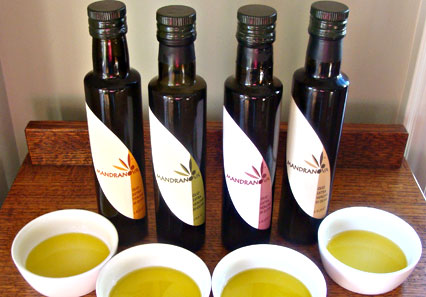
oliveoiltasting


An unusual post this, coming from Sicily where I am staying in the Mandranova resort, close to Palma di Montechiaro in the Southwest of the island. Part hotel, part kitchen, all olive farm, the estate produces some of the world's finest olive oil and almonds. Unlike most others, they don't blend their oil, they produce single varietals: Giarraffa, Biancolilla, Nocellara etc. No, I'd not heard on these before either. 

We had dinner in the hotel several times and one of the treats was the home made focaccia, usually served grilled in little squares. It was better than mine, to be sure. No doubt helped by dousing it in their own oil, fresh off the tree. Sylvia the owner and chef invited me into the kitchen to watch her technique and grab her recipe.


She uses two different flours: the Italian OO more 
commonly used for pasta, and an American bread flour, presumably for its higher gluten content.

Sylvia's Focaccia
400g 00 flour
300g bread flour
dessert spoon of sugar
420 g water
25g fresh yeast (or use 20g dried)
40g olive oil

After
20g salt
Handful chopped rosemary

Unusally, Sylvia just bunged all the initial ingredients into a mixer and pounded it out for about ten minutes. She then added the salt and the rosemary. Adding the salt slightly later will allow the yeast more uninhibited party time, to produce those all important bubbles in the dough.

The dough was removed when elastic and left to rise (about an hour in a warm Sicilian kitchen).

Then she glugs a good amount of olive oil in her baking tray, enough to slick the whole surface, and she stretches out the dough to fit. Once this is done, more oil is rubbed into the top surface. The dough is left to rise again, for at least an hour.

The bread is baked at 230°C for just 12 minutes.


I'm rather wishing now that I had a pic of her finished product but that would have meant bringing my Cannon to the dinner table; a poor show indeed.


So this is one I made back in the U.K.